World
Iran Warns of ‘Devastating’ Response to US Sanctions as America Braces for New Phase of War
U.S. Treasury Secretary Scott Bessent said the U.S. is preparing its “toughest sanctions in history” against Iran. Iran’s military chief responded that any new threats would face a “crushing” and “devastating” response.
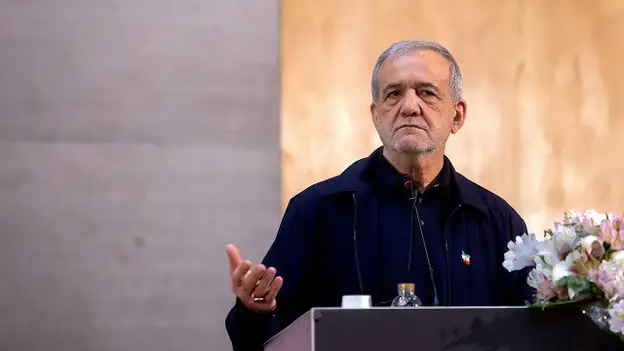
Iranian President Masoud Pezeshkian is calling for an end to the war with the U.S., saying Iran should stop while it can still claim “victory.”
Pezeshkian accused the U.S. of attacking Iranian schools, hospitals and infrastructure, while taking a swipe at hardliners inside Iran who, he said, criticize the government without understanding the reality on the ground.
He also admitted the war has taken a heavy financial toll, including worsening inflation.
Iran’s leadership now appears divided, with Pezeshkian pushing to end the conflict as the economic pressure mounts.
Iranian President Masoud Pezeshkian is calling for an end to the war with the U.S., arguing Iran should stop while it can still claim “victory.”
Pezeshkian accused the U.S. of striking Iranian schools, hospitals and infrastructure, while criticizing hardliners at home for attacking the government from the sidelines.
He also admitted the war is worsening Iran’s economic problems, including inflation.
Iran’s leadership is showing signs of division as pressure mounts and Pezeshkian pushes to end the conflict.
Iran says a trade deal with Oman has been finalized and will soon go before parliament for approval.
The announcement comes days after President Donald Trump threatened military action if Oman interferes with efforts involving Iran and the Strait of Hormuz.
Iranian officials say an agreement has also been reached on a transit route, though state media did not mention Hormuz in its latest report.
The deal comes as tensions over Iran, Oman and the strategic Strait of Hormuz continue to escalate.
Iranian oil buyers are facing a growing supply crunch as the U.S. naval blockade in the Strait of Hormuz severely limits Iran’s ability to export crude.
China, by far the largest buyer of Iranian oil, reportedly reduced imports to an estimated 534,000 barrels per day in August, down sharply from 823,000 barrels per day in July.
Kpler analyst Muyu Xu estimates that around 40 million barrels of Iranian oil are currently sitting on tankers near Malaysia, but much of that supply has already been sold. She warned buyers could face virtually no new Iranian oil for late-September deliveries if tankers continue to be blocked from passing through the Strait.
The supply concerns have already pushed oil prices higher. Brent crude jumped 2.4% Thursday to $93.78 a barrel, while U.S. crude rose 2.3% to $87.83.
With tensions escalating and no deal in sight, Iran’s control of the Strait of Hormuz remains a major threat to global oil supplies and prices.
Filed under
Related stories

Did she Really Made up Half the Story? Experts with Conclusions on the Lindsay Clancy Case
Read the full story