
World
The Dead Sea Scrolls Offer the Clearest Proof of Israels Legitimacy
Ancient Biblical History Holds Lessons Beyond Modern Political Disputes
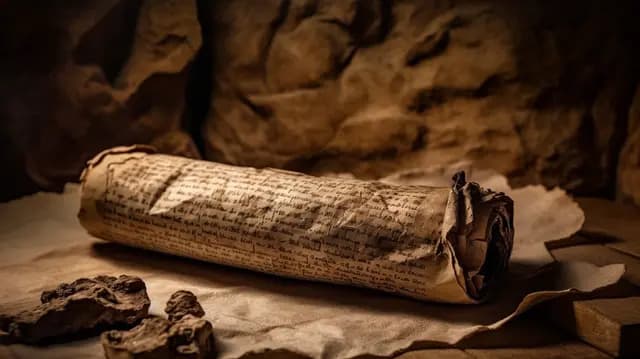
The Dead Sea Scrolls have fascinated me for years, not only because of what they reveal about Judaism and the biblical world, but also because they speak to one of the Middle East’s most disputed questions: the historical connection of the Jewish people to the land of Israel.
I have spent years advocating for peace and reconciliation between Muslims and Jews. I have never understood why recognizing the ancient Jewish connection to the land should be viewed as a threat to Muslims.
In fact, I believe the Dead Sea Scrolls are one of Israel’s strongest historical defenses. Far more powerful than the Iron Dome or an F-35.
The Scrolls challenge the increasingly common claim that Jewish attachment to the land was simply a modern political invention created by Europeans in the 19th or 20th centuries.
Their modern story began in 1947, when Bedouin shepherds discovered ancient manuscripts in caves near Qumran, close to the Dead Sea. In the years that followed, more caves were found containing thousands of fragments from hundreds of manuscripts dating back more than 2,000 years.
These texts were written by Jews living in the region long before the modern State of Israel existed.
The Dead Sea Scrolls are not simply old copies of the Bible. While biblical manuscripts are among their greatest treasures, the collection also includes prayers, religious laws, hymns, biblical interpretations, community rules, wisdom literature and writings about the end times.
They give us a remarkable glimpse into the religious and intellectual world of ancient Jews.
We can see how they prayed, interpreted Scripture, understood religious law and thought about redemption and the Messiah. We can even see the Hebrew and Aramaic languages they used.
As someone fascinated by languages, manuscripts and religious history, I find that extraordinary.
The Scrolls also bring us closer to the world of Jesus, who was a Galilean Jew living during the Second Temple period. They provide valuable context for the religious environment in which Christianity emerged.
I cannot prove that Jesus ever visited the Qumran community or personally read any of the manuscripts discovered there. But I believe it is entirely possible that he encountered texts from the same broader scriptural tradition.
The Gospel of Luke describes Jesus reading from Isaiah in a synagogue. Today, we possess a Great Isaiah Scroll discovered near the Dead Sea that predates the time of Jesus.
There is something profound about that connection.
As a Muslim, Jesus is also part of my religious tradition. The Quran speaks of him with great reverence and refers to him as the Messiah. It also recognizes many figures from Jewish history, including Moses, David, Solomon, Aaron and Joseph, while repeatedly referring to the Torah and earlier Jewish and Christian traditions.
That is why I believe Muslims should be among the last people to deny ancient Jewish history.
Recognizing the Jewish people’s ancient connection to the land does not require denying Palestinian history, humanity or legitimate aspirations.
We can acknowledge both.
Filed under
Related stories

Did she Really Made up Half the Story? Experts with Conclusions on the Lindsay Clancy Case
Read the full story