World
Trump Administration Sends Nearly 2,300 Mexicans to Guatemala Despite Mexico’s Objections
Third-country deportations expand as Guatemala says Mexican nationals are being quickly returned home after arriving from the United States
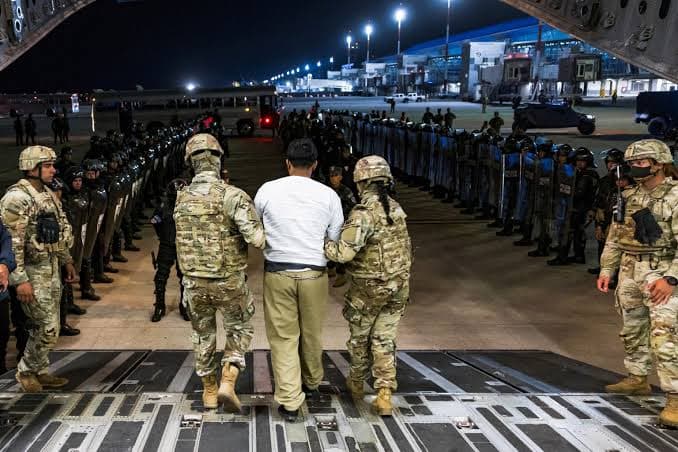
The United States has deported roughly 2,300 Mexican nationals to Guatemala this year despite objections from the Mexican government, marking another expansion of the Trump administration's controversial third-country deportation policy.
Guatemalan President Bernardo Arévalo said Wednesday that approximately 2,284 Mexican citizens had arrived in Guatemala aboard flights carrying Guatemalan deportees.
Arévalo said Guatemala coordinates with Mexican authorities to transfer the Mexican nationals back to Mexico within 24 hours of their arrival.
"In coordination with the Mexican government, what we have done is bring them through in transit so that we can return them to Mexican territory within 24 hours of their arrival in the country," Arévalo said.
Mexico objects to third-country deportations
The deportations are part of a broader Trump administration effort to send migrants and asylum seekers to countries other than their own.
The administration has defended third-country removals as one tool in its campaign to deter illegal immigration and carry out what the Department of Homeland Security describes as the largest deportation operation in U.S. history.
The policy has drawn particular attention in the case of Mexican nationals because Mexico routinely accepts its citizens deported from the United States.
Mexico's Foreign Ministry said Thursday that its government has formally objected to the practice.
"The Mexican government has expressed its opposition to this practice to US authorities and has reiterated that every Mexican citizen has the right to enter the country," the ministry said.
Guatemala has maintained that the Mexican nationals are not being permanently held in the country. According to Arévalo, they are transferred to Mexico shortly after arriving, with transportation costs covered by either the Mexican or U.S. government.
Mexicans reportedly sent to Honduras
Guatemala is not the only country involved in the policy.
Reports have also emerged of Mexican nationals being transported to Honduras following their removal from the United States.
One Mexican deportee, Arturo Trejo, told Telemundo that officials provided little information before placing him on a flight to Honduras.
"They didn't tell us anything, just to get on the flight," Trejo said.
Mexico's National Migration Institute said the United States had explained the policy as a deterrent designed to discourage deported migrants from attempting to return to the United States.
Critics call policy intimidation
The Trump administration says it is using every lawful option available to carry out its immigration agenda.
DHS said it was "utilising all lawful options to carry out the largest deportation operation in history, just as President Trump promised."
Human rights advocates, however, argue that sending migrants through third countries can create unnecessary hardship and fear, particularly when deportees have no connection to the country where they initially arrive.
Filed under
Related stories

Did she Really Made up Half the Story? Experts with Conclusions on the Lindsay Clancy Case
Read the full story