
World
Was Lindsay Clancy faking her psychosis all along? Did she commit a murder in cold blood?
Prosecutors challenge Clancy’s mental illness defense as expert testimony puts her claims of psychosis under intense scrutiny

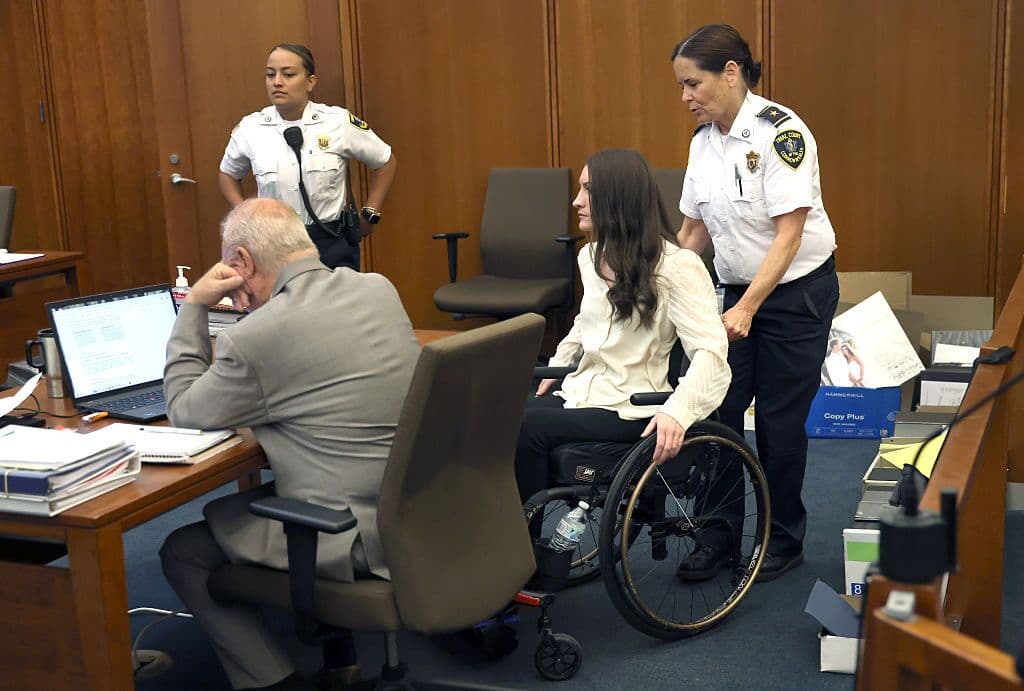
The Lindsay Clancy murder trial entered a critical stage Friday as experts gave sharply different accounts of her mental state at the time she killed her three children.
Defense forensic psychiatrist Dr. Phillip Resnick testified that a psychological test conducted for the government found no evidence that Clancy was faking or exaggerating her symptoms. He said the MMPI test actually suggested she tended to minimize her symptoms.
Resnick argued that Clancy was suffering from postpartum psychosis when she killed her children, Cora, Dawson and Callan. He said she experienced a severe mental break and was not simply pretending to be mentally ill.
But prosecutors are pushing back hard against that defense.
The prosecution has pointed to evidence it says shows planning and intent, including internet searches before the killings, efforts to determine how long her husband would be away, and sending him out of the house to pick up food and medication.
Prosecutors argue those actions are inconsistent with a woman suddenly losing control because of psychosis.
The state also called forensic psychiatrist Dr. Avram Mack as a rebuttal witness. Mack testified that when he evaluated Clancy in April 2026, she appeared largely normal. He said she was cooperative, maintained eye contact and displayed normal speech and thought processes.
Although Mack said Clancy became emotional when discussing certain subjects, he described the rest of his mental-status examination as having “nothing remarkable.”
The conflicting testimony puts the central issue of the trial into sharp focus: Was Clancy experiencing a devastating psychiatric episode, or did she knowingly plan the killings and later rely on mental illness as her defense?
Clancy, 36, does not dispute that she killed her three children. Her defense argues she should not be held criminally responsible because she was suffering from postpartum psychosis.
Defense attorney Kevin Reddington ended his case Friday after calling Resnick, whom he described as one of the leading experts on parents who kill their children.
Reddington said his client had been encouraged by the supporters gathering outside the courthouse, many wearing pink in a show of support for maternal mental-health awareness.
The prosecution has now begun its rebuttal case. Closing arguments could follow shortly, bringing the nearly month-long trial toward its final stage.
Meanwhile, Clancy’s former husband, Patrick Clancy, has moved on with his life since the January 2023 killings. He relocated to New York City, filed for divorce in 2024 and remarried in 2026.
The case has become a fierce national debate over mental illness, personal responsibility and whether a psychiatric defense should excuse a parent who kills her own children.
The Meridian
Filed under
Related stories
Did she Really Made up Half the Story? Experts with Conclusions on the Lindsay Clancy Case
Read the full story